Filter by
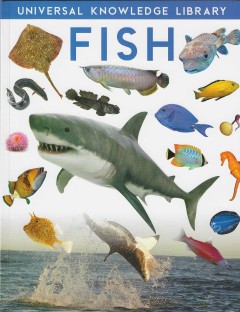
Universal Knowledge Library: Fish
Fish are amazing creatures that live in water. They come in all shapes and sizes. Some fish, like clownfish, live in coral reefs, while others, like salmon, swim in rivers and oceans. They have scales to protect their bodies and fins to help them move. Fish are an important part of the food chain and our ecosystems. Dive into the deep blue and explore the wonders of fish. From colourful coral r…
- Edition
- -
- ISBN/ISSN
- 9789363125186
- Collation
- 64 pgs.; illus. 28 cm
- Series Title
- Universal Knowledge Library
- Call Number
- 597 WIL f
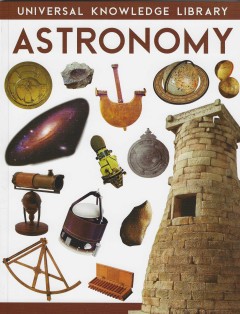
Universal Knowledge Library: Astronomy
Astronomy is the scientific study of celestial objects, space, and the universe as a whole. It encompasses the observation and analysis of stars, planets, comets, galaxies, and cosmic phenomena like black holes and supernovae. Historically, astronomy has been vital for navigation and calendar development. Modern astronomy relies on advanced technology, including telescopes, satellites, and spac…
- Edition
- -
- ISBN/ISSN
- 9789363122802
- Collation
- 64 pgs.; illus. 28 cm
- Series Title
- Universal Knowledge Library
- Call Number
- 520 WIL a
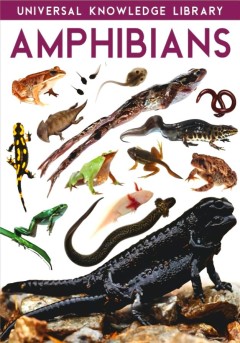
Universal Knowledge Library: Amphibians
Amphibians uniquely inhabit both aquatic and terrestrial environments. From the remarkable ability to breathe through their skin to complex life cycles involving metamorphosis, amphibians intrigue scientists and nature enthusiasts alike. However, they face numerous threats such as habitat destruction, pollutions, and disease, leading to population declines worldwide. Despite these challenges, a…
- Edition
- -
- ISBN/ISSN
- 9789363128958
- Collation
- 64 pgs.; illus. 28 cm
- Series Title
- Universal Knowledge Library
- Call Number
- 597.8 WIL a
The Universe
Every night, above our heads, a drama of epic proportions is playing out. Diamond planets, zombie stars, black holes heavier than a billion Suns. The cast of characters is extraordinary, and each one has its own incredible story to tell. We once thought of our Earth as unique, but we have now discovered thousands of alien planets, and that's barely a fraction of the worlds that are out there. A…
- Edition
- -
- ISBN/ISSN
- 9780008389321
- Collation
- 256 pgs.; illus. 29 cm
- Series Title
- -
- Call Number
- 523.1 COH t
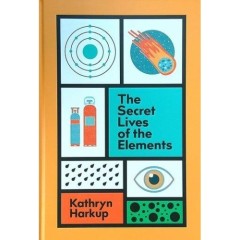
The Secret Lives of the Elements
At the most fundamental level we are all made up of the same component parts, in different ratios and differently organised, but still the same basic ingredients. Everything we can see, touch, smell and taste can be expressed in terms of 92 naturally occurring elements and a handful of man-made ones. That such a staggering variety of things can be created from a limited number of building block…
- Edition
- -
- ISBN/ISSN
- 9781529421910
- Collation
- 224 pgs.; illus. 26.5 cm
- Series Title
- -
- Call Number
- 546 HAR t

The Science Book: From Darwin to Dark Energy, 250 Milestones in the History o…
From astronomy to psychology, this comprehensive and fully illustrated volume presents the most groundbreaking milestones in the history of science. Science author Cliff Pickover continues his award-winning series--which includes The Math Book, The Physics Book, and The Medical Book--by gathering the most important thinkers and ideas in the history of science into one gorgeously illustrated vol…
- Edition
- -
- ISBN/ISSN
- 9781454930068
- Collation
- 527 pgs.; illus. 22 cm
- Series Title
- -
- Call Number
- 509 PIC t

The Periodic Table in Minutes: The elements and their chemistry explained in …
The quickest possible way to learn the fundamentals of chemistry and the elements that make up our world. An icon of science, the Periodic Table defines the fundamental chemistry of everything in the universe. In this compact yet comprehensive guide, Dan Green outlines the history, development and workings of the table, shows how its design reflects and illuminates the organization of all matte…
- Edition
- -
- ISBN/ISSN
- 9781529425482
- Collation
- 415 pgs.; illus. 15.3 cm
- Series Title
- Science in Minutes
- Call Number
- 546 GRE t

The Origin of (Almost) Everything
A journey through life, the universe and everything. Introduction by Professor Stephen Hawking. When Edwin Hubble looked into his telescope in the 1920s, he was shocked to find that nearly all of the galaxies he could see through it were flying away from one another. If these galaxies had always been travelling, he reasoned, then they must, at some point, have been on top of one another. This d…
- Edition
- -
- ISBN/ISSN
- 9781473696266
- Collation
- 312 pgs.; illus. 20 cm
- Series Title
- -
- Call Number
- 500 LAW t

The Earth Book: A World of Exploration and Wonder
Welcome to a World of Wonders. Marvel at the physical planet, travel back in time to primordial Earth, explore all branches of the tree of life, discover habitats from oceans to deserts, learn how the weather works and take a tour of the human planet from the Maasai Steppe to Manhattan.
- Edition
- -
- ISBN/ISSN
- 9781838914592
- Collation
- 63 pgs.; illus. 28 cm
- Series Title
- -
- Call Number
- 550 LIT t

The Earth Book
- Edition
- -
- ISBN/ISSN
- 9781782098409
- Collation
- 160 pgs.; illus. 31 cm
- Series Title
- -
- Call Number
- 550 BED t
- Edition
- -
- ISBN/ISSN
- 9781782098409
- Collation
- 160 pgs.; illus. 31 cm
- Series Title
- -
- Call Number
- 550 BED t
 Computer Science, Information & General Works
  Philosophy & Psychology
  Religion
  Social Sciences
  Language
  Pure Science
  Applied Sciences
  Art & Recreation
  Literature
  History & Geography